
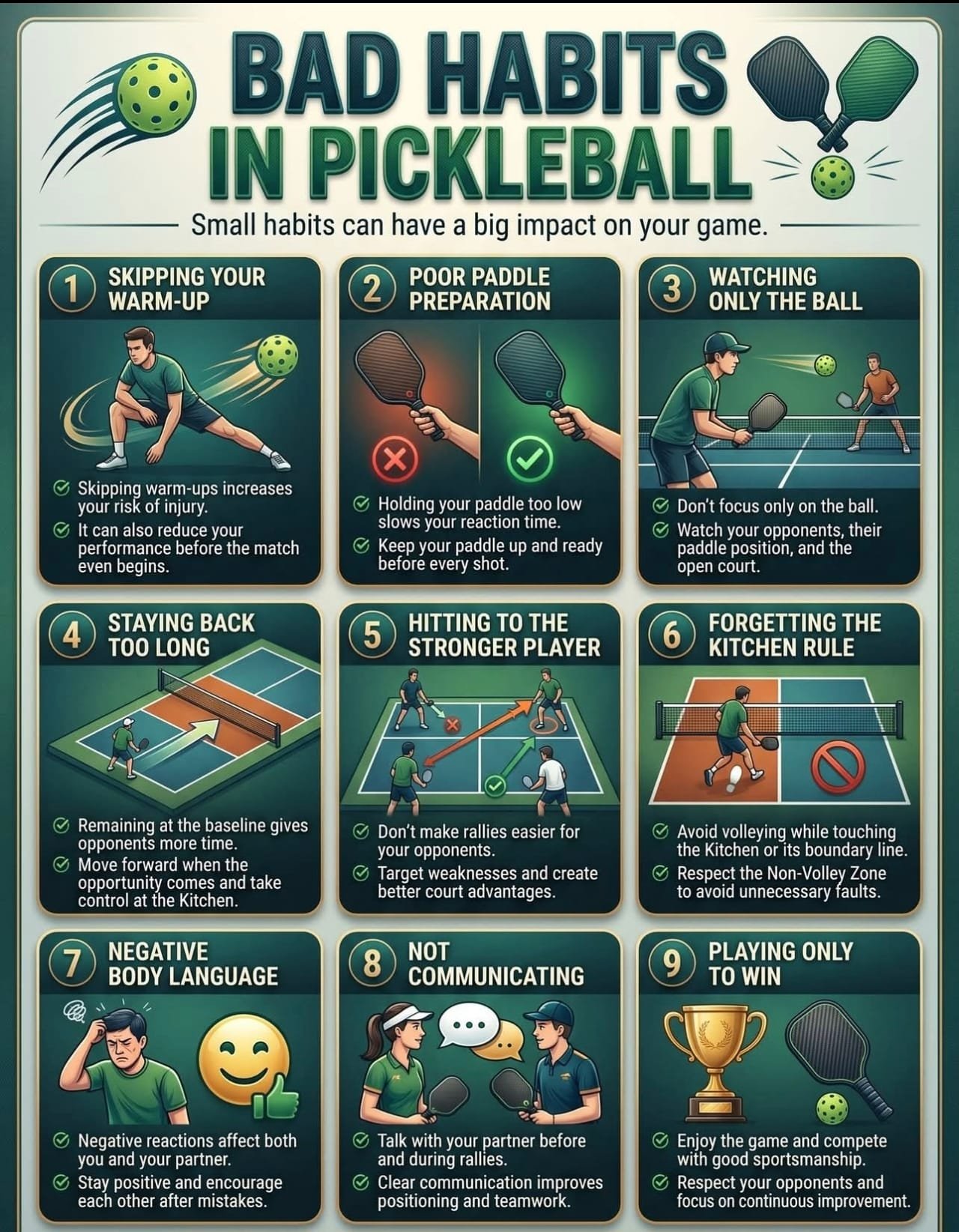
In pickleball, small, unnoticeable habits often make the biggest difference between winning tight points and handing easy advantages to your opponents. Whether it’s poor paddle positioning or a lack of partner communication, eliminating subtle errors is the fastest way to elevate your game.
Here are 9 common bad habits on the court and how to fix them to play smarter, higher-percentage pickleball.
1. Physical & Technical Habits
- Skipping Your Warm-Up: Stepping straight onto the court without dynamic stretching increases injury risk and leads to slow, sluggish movement during your first few games.
- Poor Paddle Preparation: Dropping your paddle head low while waiting at the kitchen line severely slows your reaction time against fast speed-ups. Keep your paddle chest-high and in a ready position before every exchange.
- Watching Only the Ball: Tracking only the ball prevents you from anticipating the point. Watch your opponents’ body language, paddle face angles, and open court spaces to stay one step ahead.
2. Tactical & Positioning Mistakes
- Staying Back Too Long: Remaining near the baseline gives your opponents full control of the net. Advance to the Non-Volley Zone line at the first opportunity after a solid drop or deep return.
- Hitting to the Stronger Player: Continuously driving the ball to the opponent with better reflexes makes rallies unnecessarily difficult. Target weaker positions, non-dominant hips, or open court seams.
- Forgetting the Kitchen Rule: Volleying a ball while stepping on or inside the Non-Volley Zone line results in unforced fault points. Practice staying grounded and balanced behind the line during fast exchanges.
3. Mindset & Teamwork Errors
- Negative Body Language: Slumping your shoulders or reacting visibly to errors drains energy from both you and your partner. Stay composed and reset between points with a positive attitude.
- Not Communicating: Staying silent during doubles play creates middle-court confusion and missed balls. Call “Mine!” or “Yours!” early, and talk strategy between rallies.
- Playing Only to Win: Focusing strictly on the scoreline holds back long-term skill development. Approach every match as an opportunity to practice smart shot selection, respect your opponents, and enjoy the game.
Key Takeaway: You don’t need to fix all 9 habits at once. Identify one area above to focus on during your next open play session, and watch your court consistency improve!