
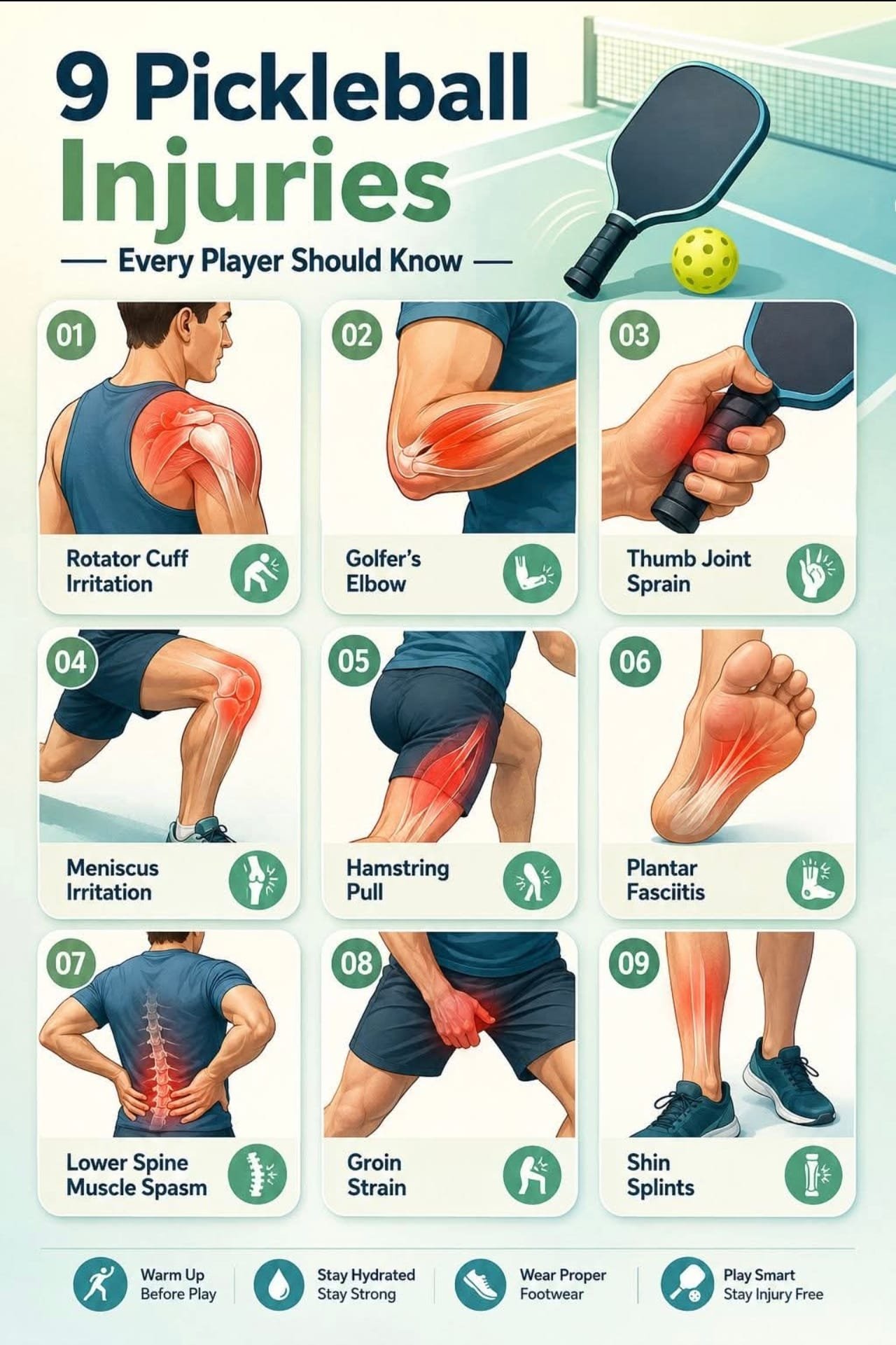
Pickleball is fast-paced, addictive, and fantastic for fitness, but the explosive lateral movements, overhead overheads, and sudden stops can strain your body if you aren’t prepared. Understanding common physical vulnerabilities is key to staying pain-free and playing consistently.
Here are nine common pickleball injuries every player should recognize, along with crucial tips to keep yourself safe and active on the court.
1. Rotator Cuff Irritation
Repetitive overhead smashes and aggressive drives can strain the rotator cuff tendons in your shoulder. Proper warming up and avoiding over-extended overhead shots help maintain shoulder stability.
2. Golfer’s Elbow
Inflammation on the inside of the elbow usually stems from tight paddle grips, heavy wrist flicking, or off-center paddle impacts during rapid dink exchanges.
3. Thumb Joint Sprain
Unexpected ball deflections or mis-hits off the paddle handle can hyperextend or sprain the thumb joint. Ensuring a proper grip size helps absorb impact force better.
4. Meniscus Irritation
Frequent twisting, pivoting, and sudden directional changes at the kitchen line place stress on the knee cartilage. Strengthening surrounding leg muscles offers better joint protection.
5. Hamstring Pull
Lurching forward to reach soft dinks or sprinting backward for lob shots without a dynamic warm-up can cause sudden hamstring muscle strains or tears.
6. Plantar Fasciitis
Repetitive pounding on hard court surfaces can irritate the thick tissue along the bottom of your foot, causing sharp heel pain—especially during early morning matches.
7. Lower Spine Muscle Spasm
Staying low in a deep dinking stance without adequate core engagement forces the lower back muscles to overcompensate, leading to uncomfortable muscle spasms.
8. Groin Strain
Wide lateral lunges to retrieve sideline shots put heavy strain on the inner thigh muscles. Maintaining groin flexibility is crucial for safe lateral court coverage.
9. Shin Splints
Fast footwork on rigid outdoor surfaces with worn-out shoes can cause throbbing aches along the shinbone. Proper court shoe cushioning is vital for shock absorption.
Essential Injury Prevention Checklist
- Warm Up Before Play: Perform 5–10 minutes of dynamic stretching before stepping onto the court.
- Stay Hydrated & Strong: Keep electrolyte levels balanced and maintain baseline leg and core strength.
- Wear Proper Footwear: Use court-specific shoes built for lateral support rather than standard running shoes.
- Play Smart, Stay Injury Free: Listen to your body and rest at the first sign of sharp joint or tendon discomfort.