
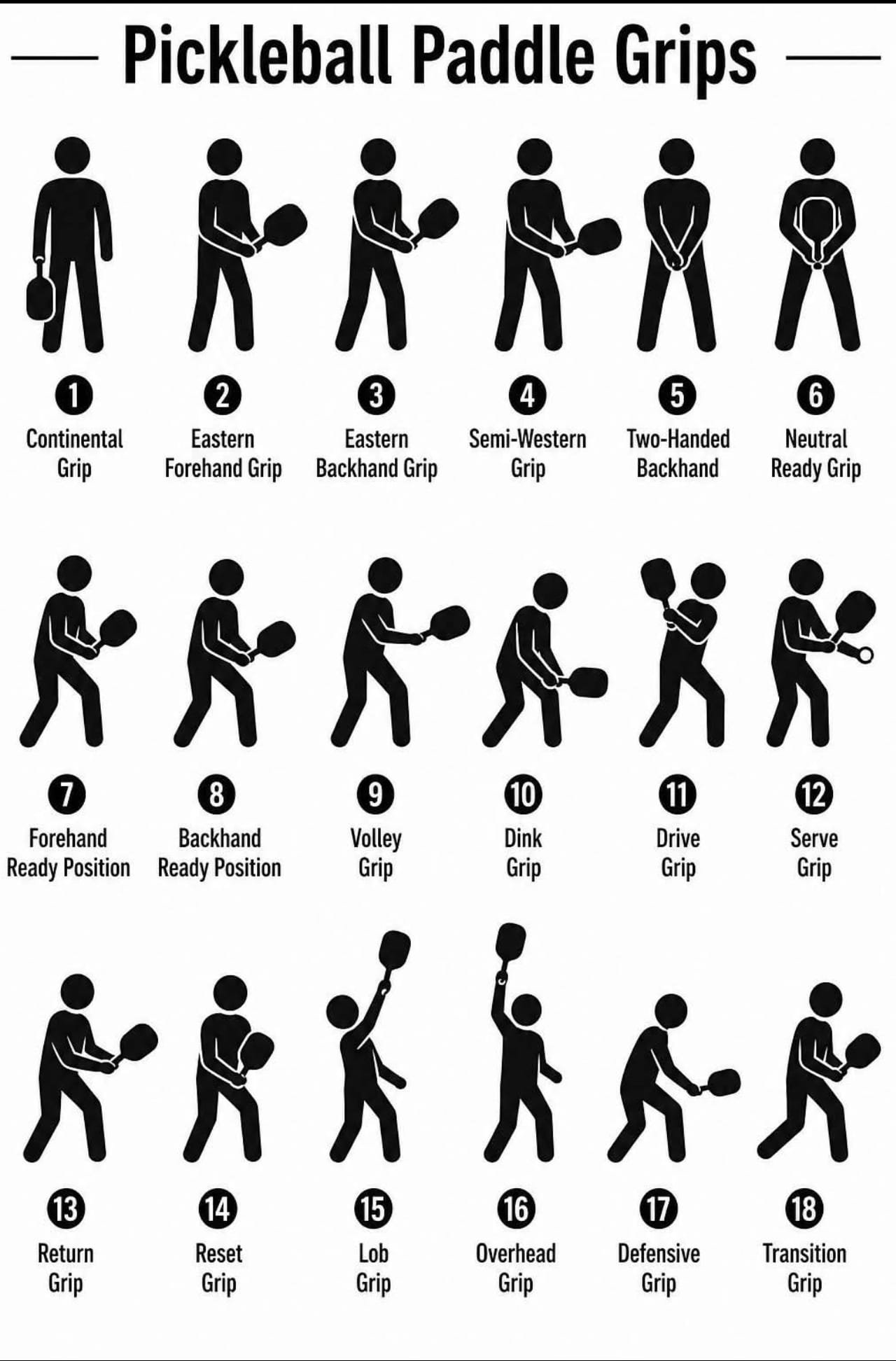
Your paddle grip is the direct link between your body and the ball. Choosing and mastering the correct grip for specific shots—from kitchen dinks to high-speed overhead smashes—gives you total control over power, spin, and shot precision.
Understanding these 18 fundamental paddle grips and ready positions will allow you to adapt instantly to any tactical situation on court.
Core Grip Variations
Different shot requirements call for distinct paddle angles. The Continental Grip provides versatility for fast kitchen resets and volleys, while the Eastern Forehand Grip gives extra power for groundstrokes and serves. Modern players also utilize the Semi-Western Grip for aggressive topspin and the Two-Handed Backhand for added stability and counter-power.
Ready Positions for Quick Reactions
Anticipation starts before the ball is struck. Maintaining a proper Neutral Ready Grip at the Kitchen line allows fast switching between forehand and backhand defense. Shifting into a dedicated Volley Grip or Reset Grip prepares your paddle face to absorb heavy drives seamlessly.
Specialized Shot Grips
Executing high-level shots requires minor grip adjustments:
- Dink Grip: A relaxed grip pressure that allows maximum feel and soft touch over the net.
- Drive & Serve Grip: Firm grip pressure that promotes paddle head speed and heavy topspin rotation.
- Lob & Overhead Grip: Allows open paddle face angles to reach high balls or lift deep lobs over aggressive opponents.
- Transition Grip: Adaptable positioning when moving from baseline to kitchen line under pressure.