
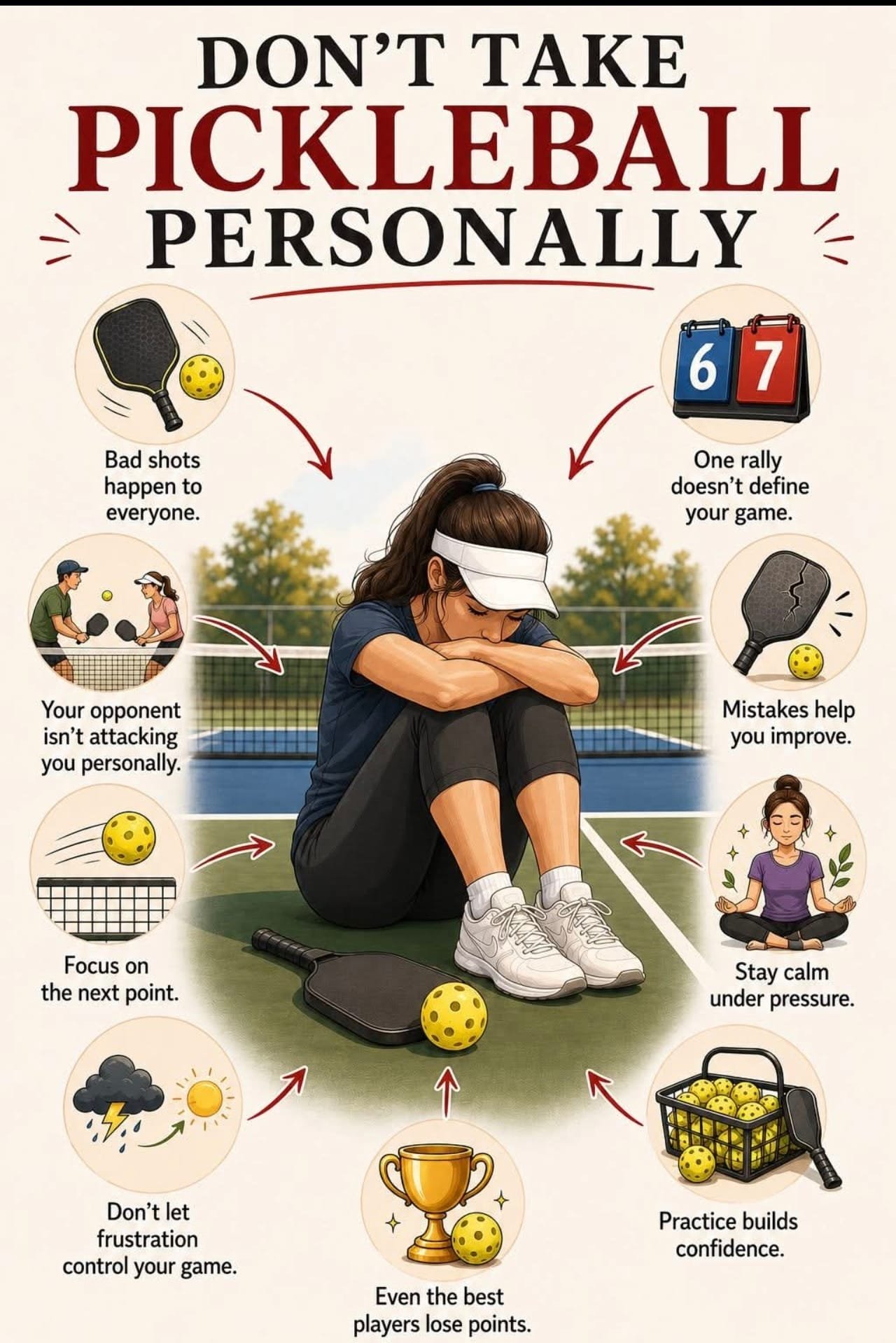
Pickleball is as much a psychological challenge as it is a contest of physical skill. When unforced errors stack up or opponents continuously target your backhand, it is easy to let emotion hijack your performance. Developing true mental toughness requires shifting your focus from emotional reactions to tactical execution and self-regulation.
The Psychology of Court Resilience
Every pickleball player experiences bad shots, tough line calls, and strategic targeting. What separates high-level players from intermediate competitors is not the absence of mistakes, but the speed at which they recover emotionally. When you internalize errors, your muscles tighten, your vision narrows, and your decision-making degrades.
Core Mindset Principles for Peak Performance
To maintain peak performance during competitive matches, incorporate these non-negotiable mental habits into your routine:
- Bad shots happen to everyone: Even top professionals miss routine dinks and pop up transition shots. Accept that errors are an inherent part of the sport.
- Opponents attack positions, not people: Strategic targeting is standard gameplay, not a personal insult. View isolating tactics objectively and adjust your positioning rather than reacting emotionally.
- Focus entirely on the next point: The previous point is historical data—it cannot be altered. Reset your mind instantly during the transition between rallies.
- Control frustration before it controls you: Frustration leads to rushed footwork and forced low-percentage drives. Recognize physical signs of tension and breathe intentionally.
- Even champions drop points: Deficit management is part of winning. Losing three consecutive points is simply a momentum shift, not a permanent outcome.
- Mistakes provide tactical feedback: Treat an unforced error as diagnostic data. Did you hit late? Was your paddle face open? Fix the technical cause without judging yourself.
- Stay calm under match pressure: Deep, controlled diaphragm breathing lowers heart rate and keeps fine motor skills sharp during tight game situations.
- Trust your practice routine: Confidence comes from structured drilling. Rely on your muscle memory rather than second-guessing shot selection mid-rally.
Actionable Steps to Reset Between Rallies
Implement a strict 5-second post-rally routine: turn away from the net, take a deep breath, conduct a brief physical reset (like adjusting your grip or tapping paddles with your partner), and re-focus on your return or serve routine. By treating every point as an isolated event, you protect your game from emotional volatility and build winning consistency.