
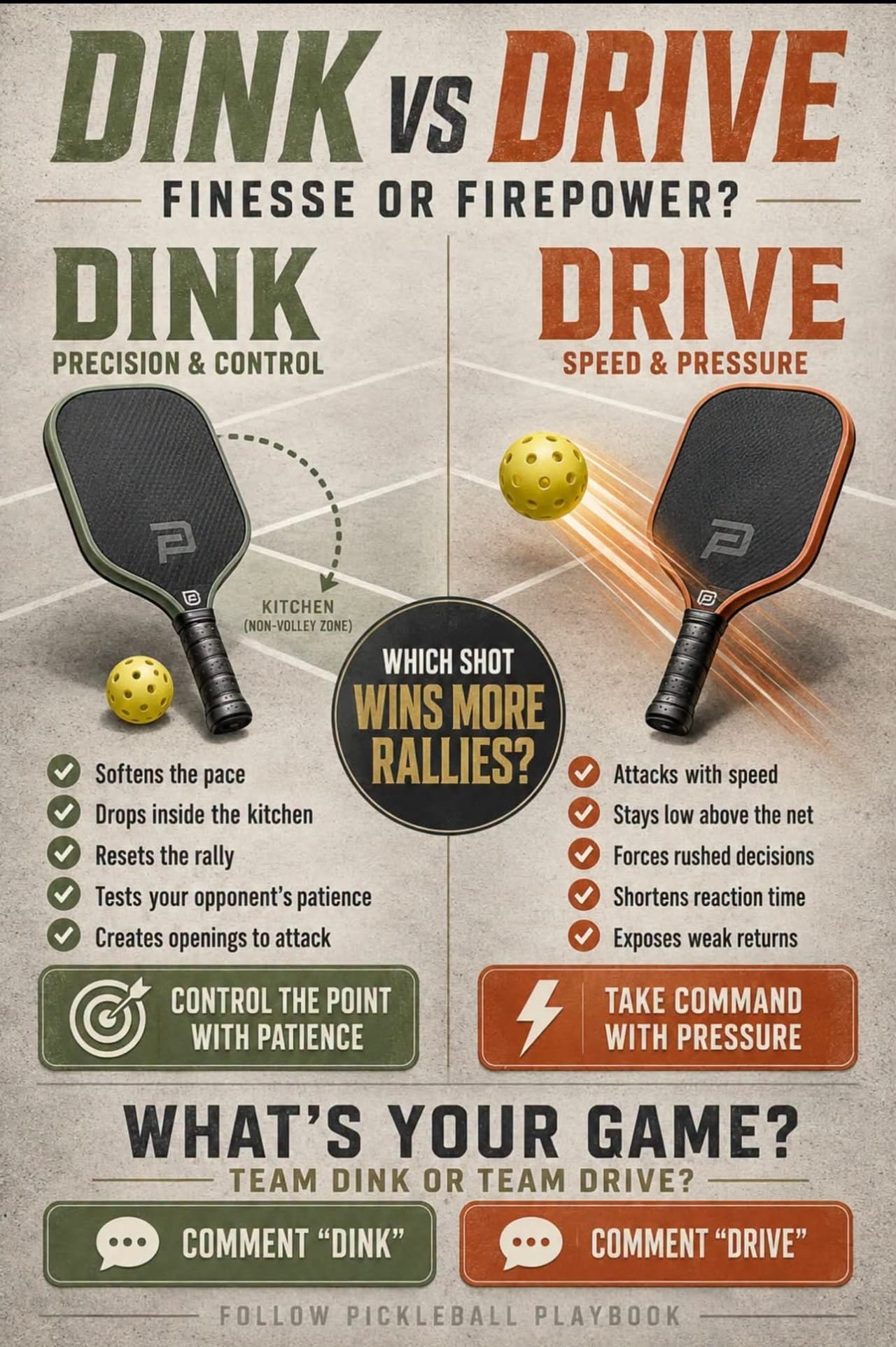
One of the most foundational tactical debates in pickleball revolves around shot selection: should you rely on the finesse of the dink or the firepower of the drive? Understanding when to deploy soft touch versus aggressive speed is what separates developing players from strategic, advanced competitors.
The Dink: Precision, Control, and Patience
The dink is a soft, controlled shot struck from near the non-volley zone (kitchen) that arcs low over the net and drops cleanly into the opponent’s kitchen area. It serves several core strategic functions:
- Softens match pace: Neutralizes aggressive opponents by taking power off the ball and forcing a controlled, unhurried rally.
- Drops inside the kitchen: Prevents opponents from taking the ball out of the air as an offensive volley.
- Resets chaotic rallies: Allows your team time to recover court positioning and restore balance during high-pressure points.
- Tests opponent patience: Forces the opposing team into lengthy rallies where low-percentage attacks can be baited.
- Creates strategic attack openings: Moves opponents out of position to generate high-margin pop-ups for decisive overhead put-aways.
The Drive: Speed, Pressure, and Reaction Timing
The drive is a fast, firm shot struck with topspin or flat trajectory intended to compress reaction time and put immediate pressure on the defense:
- Attacks with pure speed: Punishes short, high returns or weak middle balls before the defense can set up.
- Stays low over the net: Forces opponents to volley upward, creating opportunity for follow-up attacks.
- Shortens reaction windows: Reduces the time opponents have to organize footwork and prepare paddle face angle.
- Exposes weak contact points: Overwhelms players with poor paddle preparation or slow lateral recovery.
How to Balance Soft and Hard Game Strategies
Winning matches rarely comes down to choosing exclusively one style. Master players fuse both approaches: using drives from the transition area or baseline to create short returns, followed immediately by controlled dinking to command the kitchen line and finalize the point with patience.