
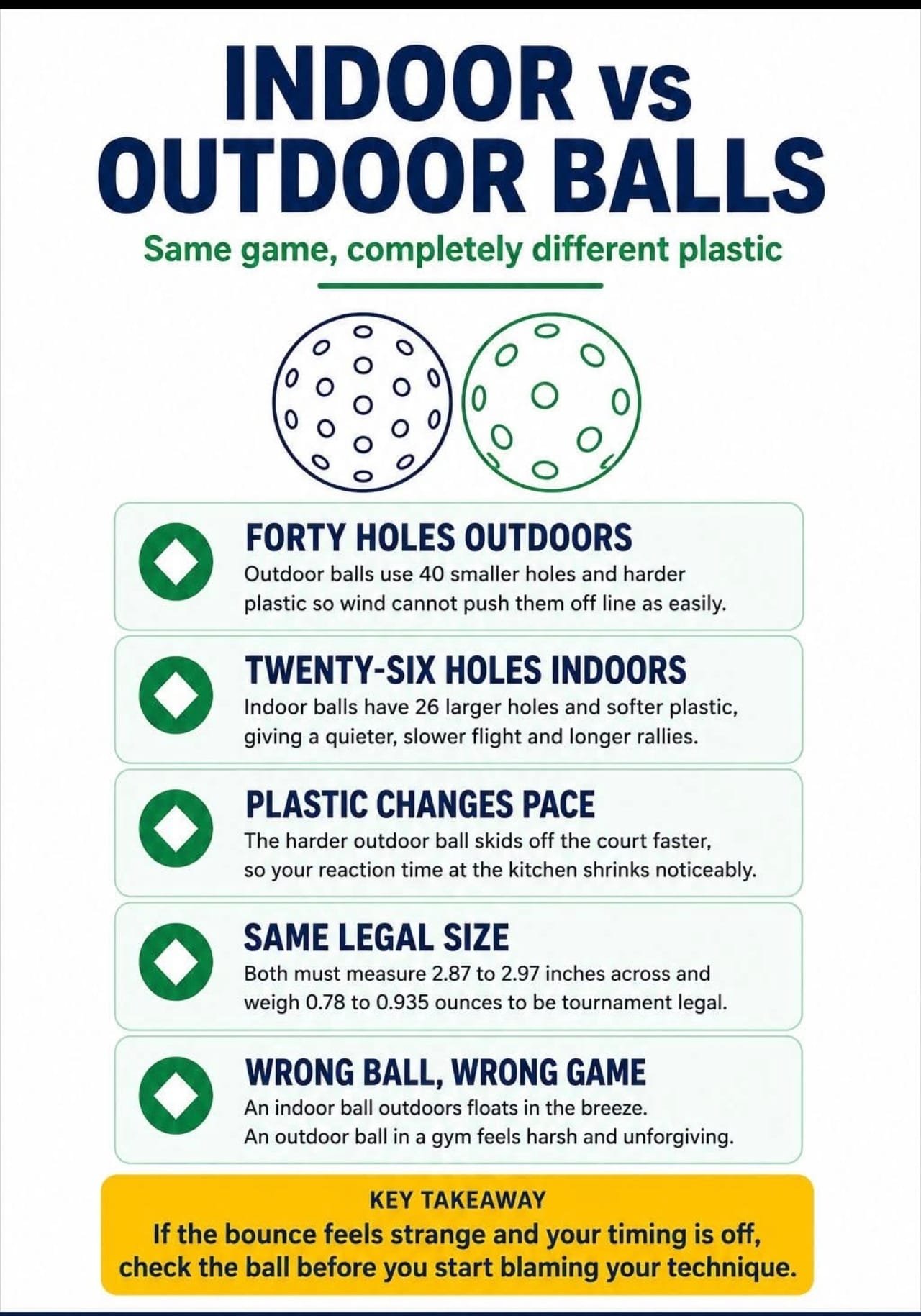
If your bounce feels strange and your timing is off, check the ball before blaming your technique!
While indoor and outdoor pickleball share the same fundamental rules, the balls used for each are made from completely different plastics and designed for distinct court environments.
Key Technical Differences:
- Outdoor Balls (40 Holes):Outdoor balls feature 40 smaller drilled holes and are made from harder, heavier plastic. This design prevents wind resistance from pushing the ball off line while ensuring durability against rough outdoor court surfaces. Outdoor balls bounce higher and skid off the court significantly faster.
- Indoor Balls (26 Holes):Indoor balls feature 26 larger holes and are constructed from softer, lighter plastic. They produce a quieter, slower flight on smooth gym floors, leading to longer rallies and more controlled play.
Quick Comparison Chart:
| Feature | Outdoor Balls | Indoor Balls |
| Hole Count | 40 Small Holes | 26 Large Holes |
| Plastic Type | Hard & Heavy | Soft & Light |
| Pace of Play | Fast & Skiddy | Slower & Strategic |
| Wind Resistance | High | Low (Indoor Use Only) |
| Legal Size | 2.87 inches to 2.97 inches | 2.87 inches to 2.97 inches |
Pro Tip: Using an indoor ball outdoors will cause it to float uncontrollably in the breeze, while using an outdoor ball on an indoor wood court feels harsh and unforgiving. Always match your ball to your court surface!